
If your Pokémon cards are currently living in a shoebox, rattling around in tins, or stacked in piles “just for now”, you’re not alone. Collecting is meant to be fun—but bent corners, scuffed holofoils, and mystery stains are not. The good news? You don’t need a museum-grade setup to keep your collection safe and easy to enjoy.
In this guide, you’ll find practical Pokémon card storage ideas UK collectors can actually use at home—whether you’ve got a handful of favourites, a growing binder, or a full-on trading card corner. We’ll cover simple ways to organise by set and rarity, protect cards from moisture and sunlight, and create a display that looks tidy (not chaotic).
Along the way, we’ll share a few helpful storage options from Goods & Stuff—because the right binder, box, or label system can turn “card clutter” into a collection you’re proud to show off.

How to organise Pokémon cards by set, rarity, and value
The best organisation method is the one you’ll stick to. A perfect spreadsheet system is pointless if it’s too fiddly to maintain, so start with a structure that matches how you collect.
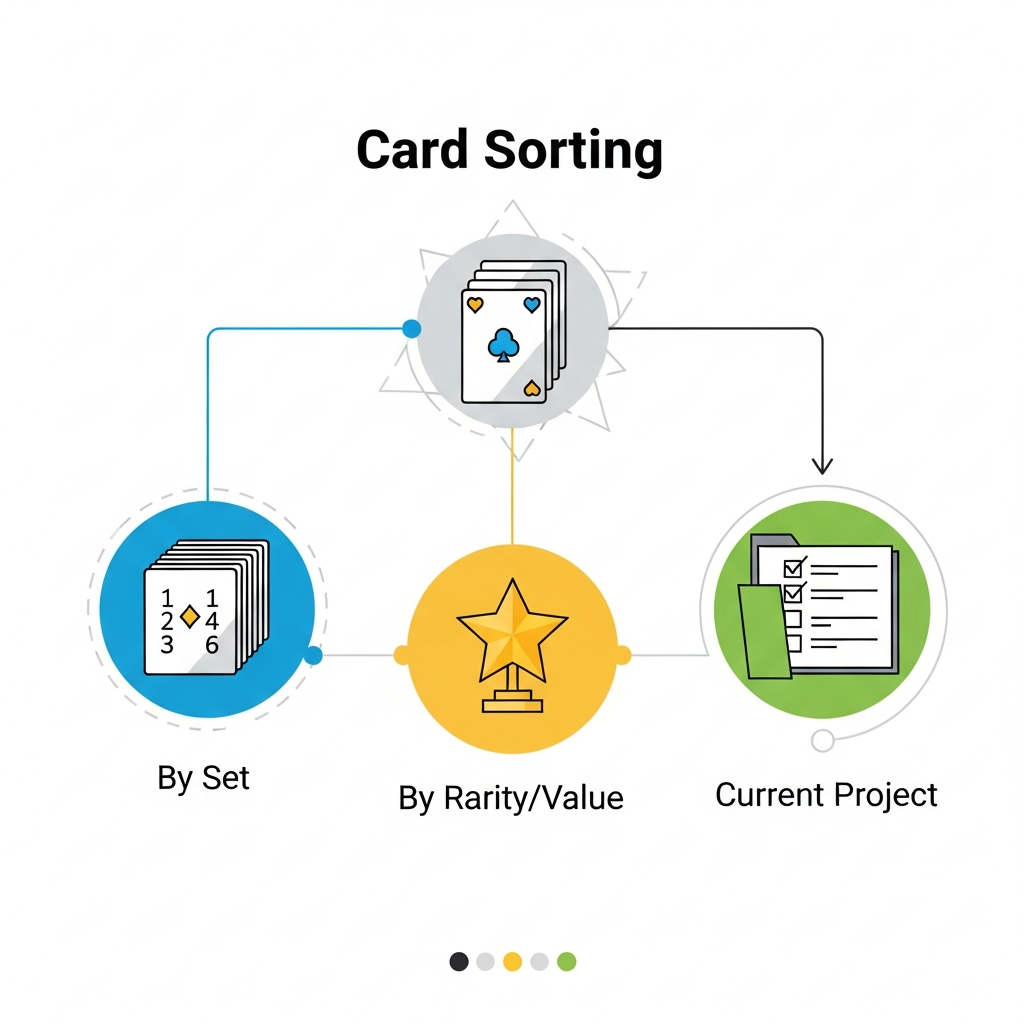
Quick sorting methods that work (and stay working)
-
By set: Great if you’re building master sets or like seeing the artwork progression.
-
By type (Water, Psychic, etc.): Satisfying for collectors who love themed pages.
-
By rarity/value: Helps you protect your best cards first and makes trading easier.
-
By “current project”: One section for the set you’re actively completing, one for everything else.
A simple “Sunday reset” routine (10 minutes)
-
Put loose pulls into a “to-file” tray or small box.
-
Sleeve anything shiny or rare straight away.
-
File into binder sections (or a labelled box) once a week.
If you want the easiest daily system, pair a binder for your “keepers” with a box for duplicates and trades:
-
Premium Trading Card Binder for your main collection: Premium Trading Card Binder
-
A small labelled box for swaps and spares (more on boxes below)
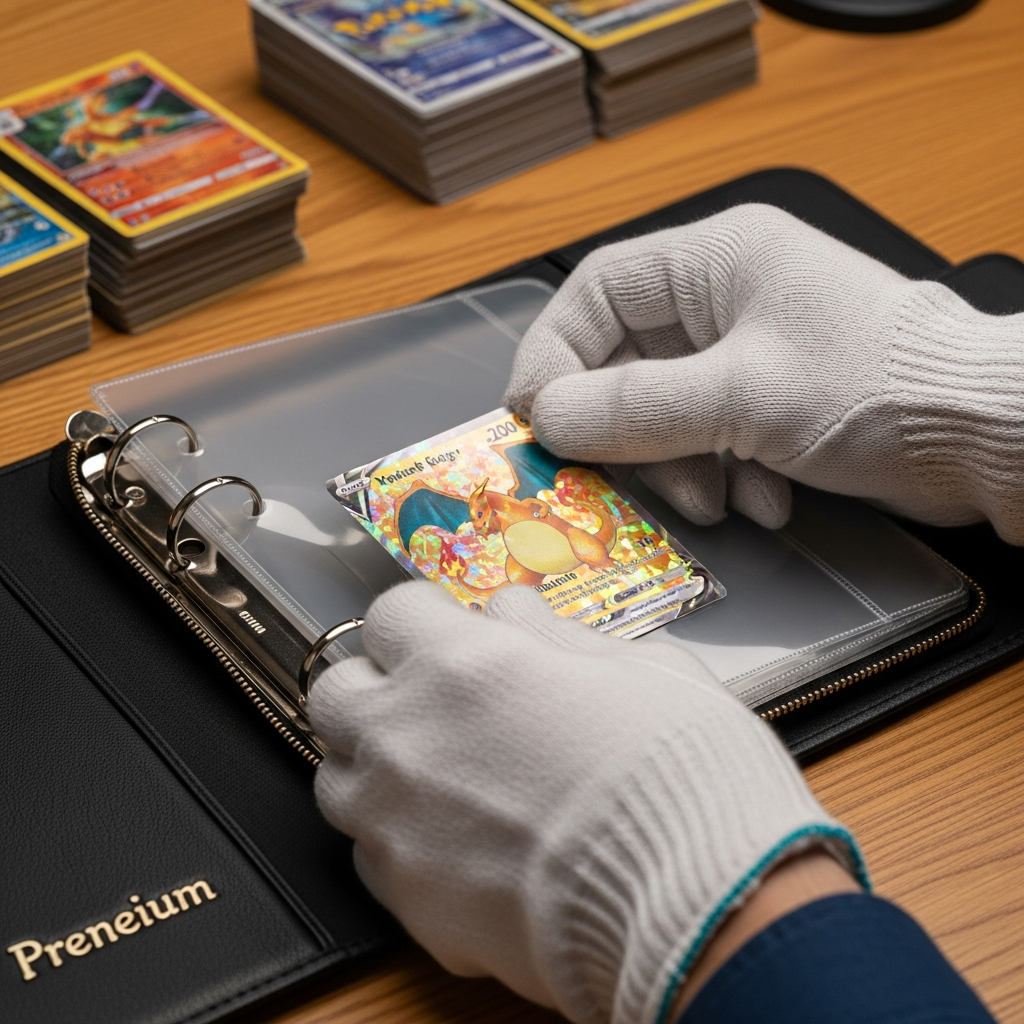
Best binder for Pokémon cards UK collectors: pages, sleeves, and layout tips
Binders are popular for a reason: they’re easy to browse, satisfying to organise, and ideal if you like seeing full pages. The biggest mistake is putting cards into the wrong pages (or skipping protection entirely).
What to look for in a binder setup
D-ring vs zipped binder
-
Zipped binders help protect cards from dust and accidental spills.
-
D-ring binders are flexible and good if you’re adding pages often (just avoid overstuffing).
Side-loading pages
Side-loading sleeves reduce the chance of cards sliding out. If you’re using a ring binder, make sure the pages feel sturdy and don’t crinkle easily.
Sleeves matter
-
Use soft sleeves for most cards.
-
Consider rigid top loaders for valuable pulls (stored separately in a box).
Binder layout ideas you’ll actually maintain
-
Keep one binder per “theme”: one for favourite artworks, one for sets-in-progress, one for trades.
-
Use dividers for set sections (even simple card dividers work).
-
Leave one “buffer page” per set so you can add new cards without redoing everything.
A binder becomes much easier to use when your “overflow” has a home too—try a small storage box for duplicates and promos, then label it clearly (so it doesn’t become a second shoebox).
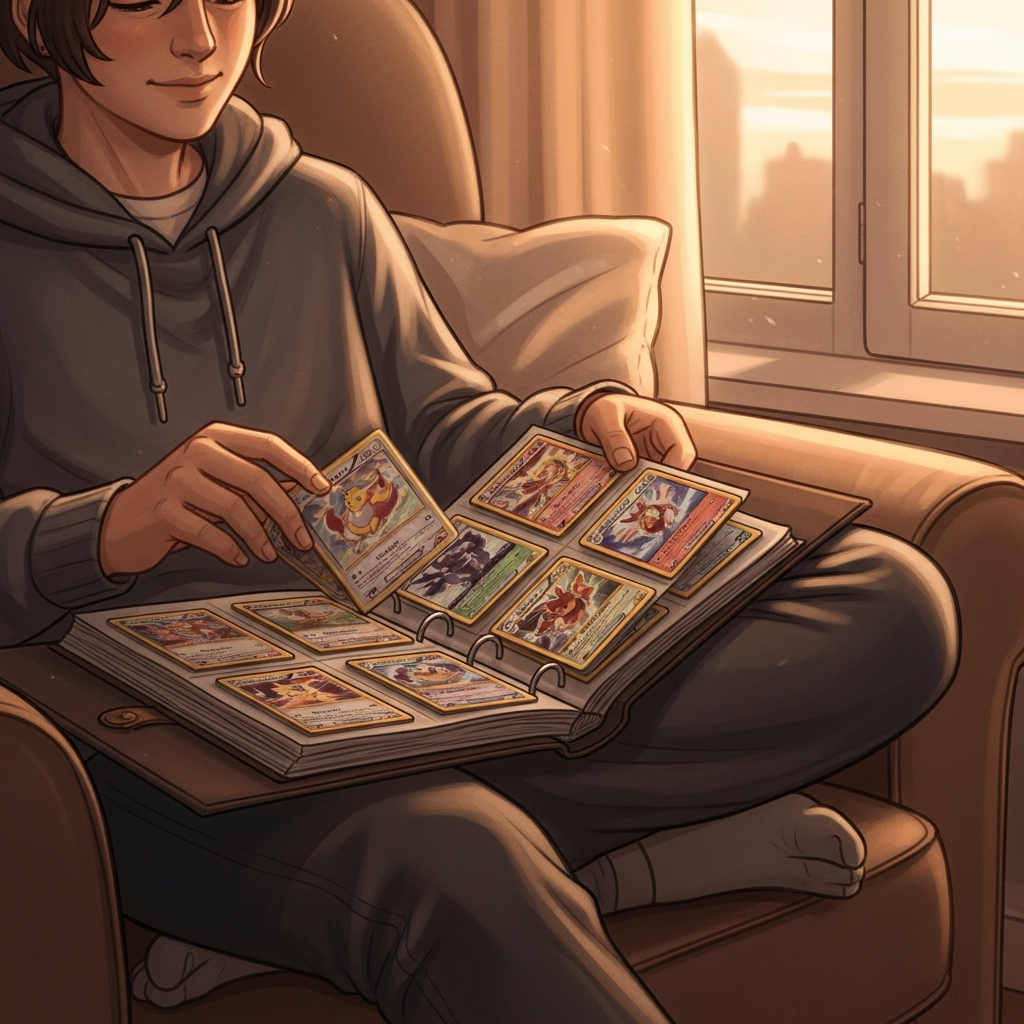
Pokémon card display ideas that look tidy (not cluttered)
If you’ve got a few cards you genuinely love—full-art favourites, a nostalgic starter line, or a hard-earned pull—displaying them makes collecting feel even better. The key is protecting the card while keeping the display calm and intentional.
Display options for different spaces
On a shelf (easy + changeable)
-
Use clear acrylic stands so the card is the focus.
-
Stick to a simple rule: 3–5 items max per shelf section (cards + a tin + one small figure, for example).
On a wall (looks “grown-up”, still fun)
-
Try a frame or display case for a mini “gallery” of your top cards.
-
Keep it out of direct sunlight to prevent fading.
On a desk (collector corner without mess)
-
Use a small tray or organiser for sleeves, coins, and dice.
-
Store top loaders upright in a compact holder so they don’t slide around.
If you’re building a full setup, it helps to shop by category rather than hunting bits and pieces. Start here: Trading Card Storage Collection
How to protect Pokémon cards from damage in UK homes
UK homes come with their own hazards: damp corners, radiators blasting in winter, and the classic “where did that condensation come from?” moment. Card protection is about controlling moisture, light, pressure, and handling.
The four biggest threats (and quick fixes)
1) Moisture
-
Avoid storing cards near external walls, windows, or bathrooms.
-
Use a lidded storage box (even better if it’s snug-fitting).
2) Sunlight
-
Don’t display valuable cards in direct light.
-
Rotate what’s on display if you love a sunny shelf spot.
3) Pressure and bending
-
Don’t stack heavy tins on top of binders.
-
Keep boxes upright and filled (cards sliding inside boxes leads to corner wear).
4) Handling
-
Keep a small “opening kit”: sleeves, a soft cloth, and a dedicated surface.
-
Sleeve first, admire second.
A practical upgrade here is adding a label system so everything goes back where it belongs—especially if multiple people in the house collect. Even a simple set of sticky labels can stop your “rare” pile getting mixed into bulk.
Storage solutions for Pokémon tins, bulk cards, and duplicates
Tins are brilliant… until you’ve got six of them. Bulk cards and duplicates are the real space-eaters, so give them a system that prevents “tin sprawl”.
A bulk system that stays organised
Step 1: Separate bulk from “binder-worthy”
-
Bulk = duplicates, common cards, code cards, energy cards
-
Binder-worthy = favourites, set goals, trade value
Step 2: Use boxes for bulk (not tins)
Tins are fine short-term, but boxes are easier to label, stack, and sort. Use two boxes:
-
Box A: “Trades + duplicates”
-
Box B: “Bulk + energy + code cards”
Step 3: Label by purpose, not perfection
Labels like “Sword & Shield bulk” are nice—but “TRADE”, “BULK”, and “TO FILE” are easier to keep up.
If you want your collection to feel calmer instantly, create a mini station:
-
A binder for keepers: Premium Trading Card Binder
-
A clear lidded box for bulk: Clear Lidded Storage Box
-
A label set
