If you’ve been Googling Pokémon vs Lorcana, you’re probably in one of two camps: you (or your kid) want to start a trading card game, or you’re already collecting and wondering if a new obsession is about to begin. Either way, choosing the “right” TCG matters—because once you’re in, it’s very easy to end up with a drawer full of sleeves, binders, booster packs… and a wish list that never stops growing.
In the UK, the three big names people compare are Pokémon TCG (the all-ages classic), Disney Lorcana (the newer Disney-powered hit), and Magic: The Gathering (the strategy heavyweight). Lorcana’s launch was famously hard to get hold of, with reprints being fast-tracked after early sell-outs and soaring demand.
Below, you’ll get a practical, newcomer-friendly breakdown—gameplay, collecting, community, and cost—so you can confidently pick the best fit (or decide to dabble in more than one).
Pokémon vs Lorcana: the 30-second overview
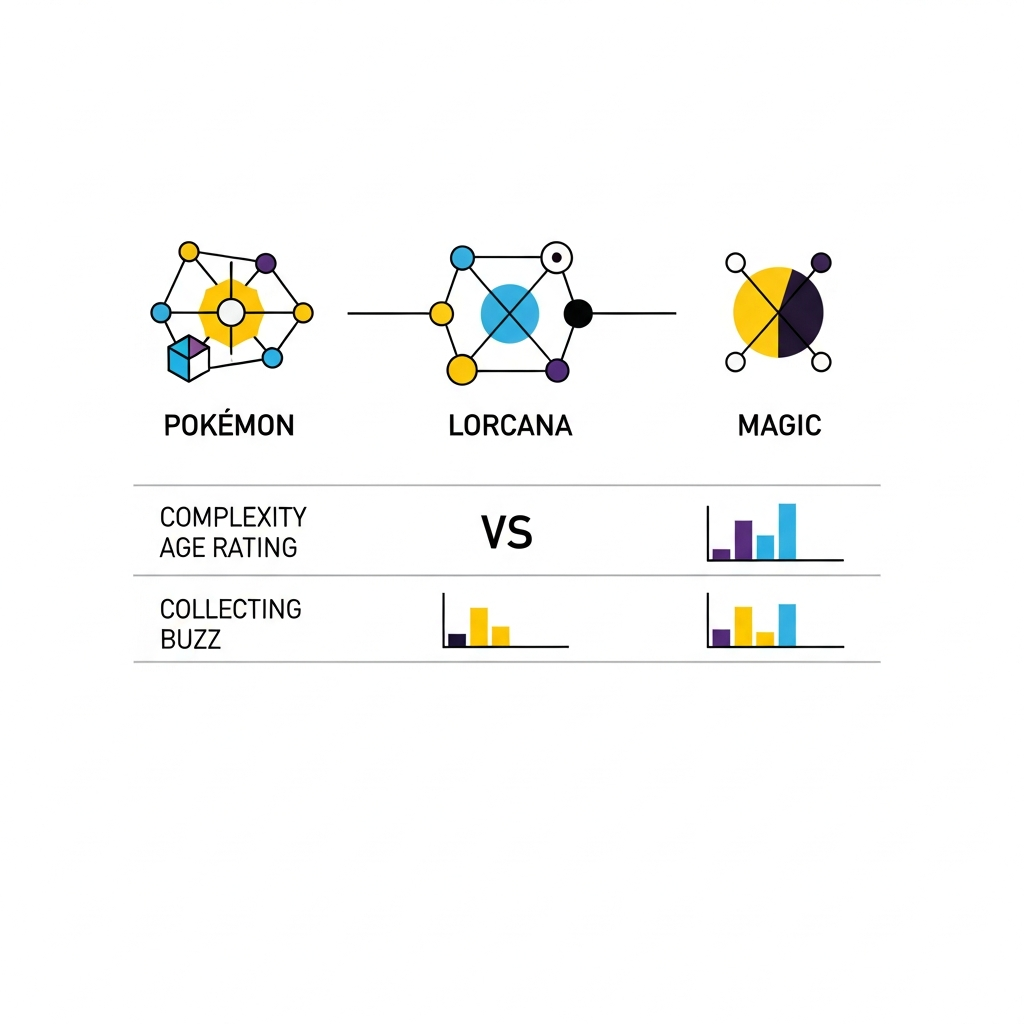
Here’s the quickest way to think about Pokémon vs Lorcana (and where Magic fits):
| Factor | Pokémon TCG | Disney Lorcana | Magic: The Gathering |
|---|---|---|---|
| Best for | Families, collectors, kids/teens | Disney fans + approachable gameplay | Strategy lovers, competitive play |
| Complexity | Beginner-friendly | Accessible, slightly deeper over time | Deepest rules + decision density |
| Collecting “buzz” | Huge nostalgia + chase cards | High early demand + character appeal | Long history + iconic rares |
| Typical age rating | Ages 6+ |
Ages 8+ Ages 13+
| Product cadence | Frequent sets + lots of formats | Regular sets since 2023 | Constant releases + many formats |
If you already know you want to browse what’s in stock across all three, start here: Collectibles & Toys: Shop All (use the category list to jump to Pokémon, Lorcana, or Magic).
Lorcana vs Pokémon TCG: gameplay & complexity (plus where Magic stands)
Pokémon TCG: easiest “first TCG” for most households
Pokémon is built around a simple, satisfying loop: set up your Pokémon, attach Energy, play Trainer cards, take Prize cards, repeat. That structure makes it genuinely learnable even if you’ve never touched a TCG before—especially with pre-built decks and beginner products. Pokémon’s age guidance is commonly listed at 6+, which lines up with how approachable the core rules are.
Who it suits:
-
Kids and families who want something easy to learn
-
Collectors who love chase cards, artwork, and nostalgia
-
Anyone who wants a massive community and endless content
Disney Lorcana: accessible, with a clever “ink” system
Lorcana’s big “aha” mechanic is turning cards into ink (your resource), which makes early deckbuilding feel less punishing. The theme is also instantly understandable: Disney characters, gorgeous art, and a clear goal (gaining lore). Lorcana is generally positioned at 8+, which feels right: it’s friendly, but there’s plenty of room to level up.
Who it suits:
-
Disney fans (families, “Disney adults”, collectors)
-
Players who want a modern TCG that’s easy to pick up
-
People who enjoy learning a meta without decades of history
Magic: The Gathering: the “deep end” (in a good way)
Magic is the original strategy playground. There’s more vocabulary, more interactions, and more formats than the others—so it can feel intimidating at first. But if you like clever combos, long-term mastery, and a competitive scene that’s always active, it’s hard to beat. Magic’s commonly listed age guidance is 13+, reflecting that complexity.
A smart starter tip: If you’re torn between “casual fun” and “strategic depth”, start with Pokémon or Lorcana, then add Magic later when the basics feel natural.
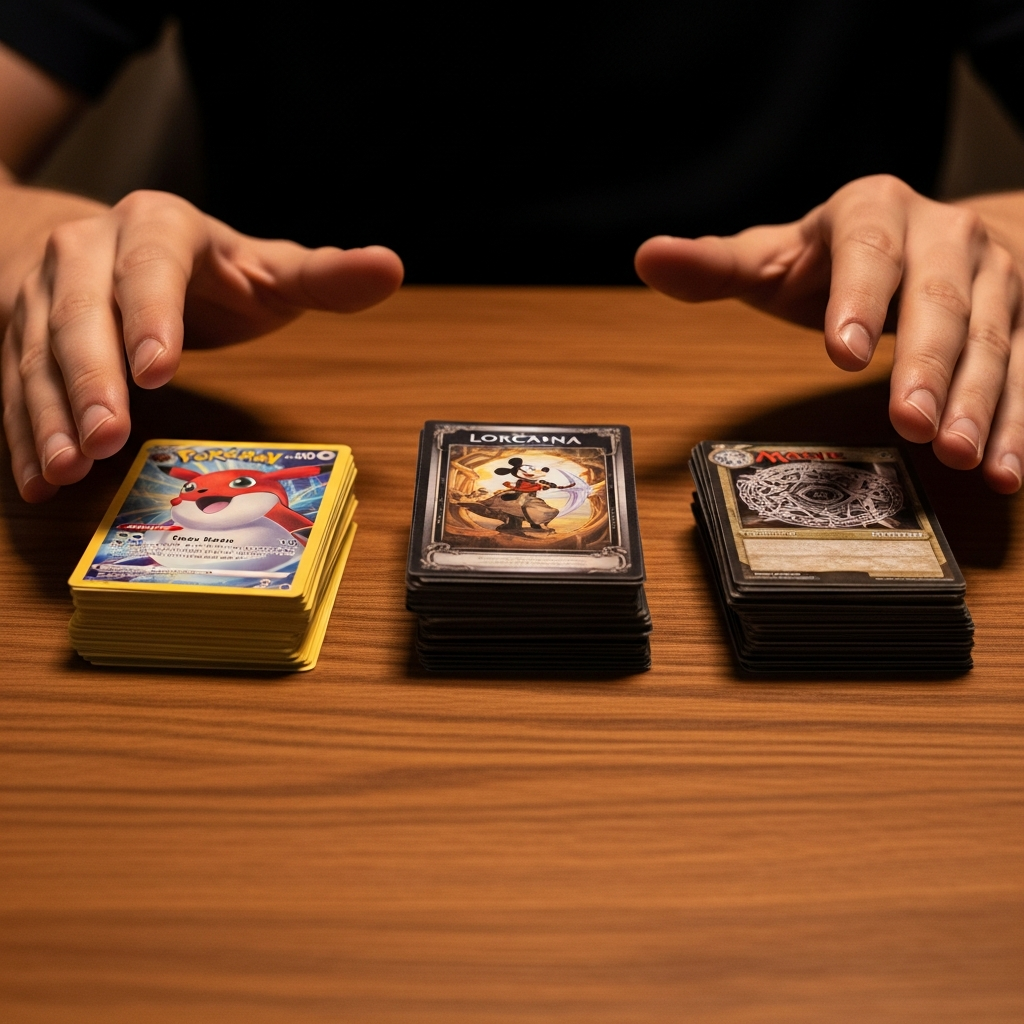
Collectibility & value: what you’re really paying for
Let’s be honest: for many people, the “game” is only half the hobby. The other half is collecting—opening packs, building binders, chasing art, and occasionally pulling something you’ll talk about for years.
Pokémon: the biggest collector ecosystem
Pokémon has a huge secondary market and unmatched nostalgia—so there’s always demand for both modern pulls and older classics. Even mainstream retailers and toy lists regularly spotlight Pokémon card products around gifting seasons, which says a lot about how consistently popular it stays.
And if you like tracking trends, eBay’s collector updates often show Pokémon sitting right near the top of popular searches and sales activity in collectibles.
What to buy first (collecting-focused):
-
Booster packs/boxes for the thrill
-
A binder + sleeves if you want to keep condition tidy
-
A premium box if you want a “big moment” gift or treat
Example pick: Japanese Pokémon Scarlet EX Booster Box w1S (great if you love premium openings and a collector feel).
Lorcana: demand + Disney characters = instant collector energy
Lorcana’s early period was defined by sell-outs and scarcity, with Ravensburger confirming extra print runs after demand outpaced supply.
Even into 2024, high-profile launches drew major queues—like the Disney Store London event that reportedly saw hundreds lining up.
That doesn’t guarantee long-term value (no TCG does), but it does mean Lorcana has strong collector momentum.
What to buy first (Lorcana):
-
A starter deck to learn the flow
-
A few boosters once you know what you enjoy
-
Accessories (deck boxes, sleeves, playmats) if you want a “premium table” feel
On our site, the easiest route is Shop All → tap the Lorcana category to see what’s available.
Magic: collecting meets strategy (and a huge history)
Magic has decades of iconic cards, special treatments, and collector angles—and it’s deeply tied to play formats. That means your collection can be both “display-worthy” and genuinely usable at events.
A fun entry point is themed products that feel giftable and playable, like:
Magic: The Gathering – Foundations Starter Collection Scene Box
Community & scene in the UK: where you’ll actually play
If you want more than kitchen-table games, community matters. The good news: all three have a real UK scene—you just engage differently.
Pokémon: structured, family-friendly organised play
Pokémon’s organised play system (Play! Pokémon) supports leagues and events worldwide, and in the UK you’ll often find beginner-friendly meetups at game stores.
It’s one of the easiest scenes to join if you’re a parent looking for something social and structured for your child.
Lorcana: growing fast through local stores and events
Lorcana organised play has been built with local store events in mind, and participation has expanded quickly since launch.
Because it’s newer, the vibe can be very welcoming—lots of players are still learning, swapping tips, and trying decks.
Magic: the most established weekly play culture
Magic’s long-standing store ecosystem means weekly events are common—many people start with a Friday night event and build from there.
If you enjoy improving your play over time, Magic’s community depth is a big plus.
Availability & cost in the UK: what to expect (and how to avoid overspending)
For most newcomers, the biggest mistake is overspending before you know what you enjoy. Here’s a sensible way to approach it:
Pokémon (availability: easiest)
Pokémon is widely available, and you can spend as little as a few packs or go big with premium boxes. If you’re buying gifts, Pokémon products are common on UK toy wish lists—so restocks tend to be frequent.
Budget approach:
-
Start with a pre-built deck or a few boosters
-
Add accessories (sleeves + binder) once you’re sure
Lorcana (availability: improved, but spikes happen)
Lorcana availability has improved since the early scramble, but popular releases can still spike demand (especially around big launches and Disney-heavy hype moments).
If you’re price-sensitive, avoid panic-buying at inflated prices—wait for restocks where possible.
Magic (availability: consistent, but product choice matters)
Magic is widely stocked, but it has lots of product types. Your costs depend on whether you’re buying for casual play, Commander, competitive formats, or collecting special releases.
Budget approach:
-
Choose one format first (Commander is popular for social play)
-
Buy a preconstructed deck or a bundle, then upgrade slowly
And for UK shoppers who care about delivery speed: Goods & Stuff ships with Royal Mail tracked options, and free UK delivery applies over £50 (per our policy).
Pokémon or Magic: which is better (and when Lorcana is the best answer)
Here’s the cheat sheet recommendation, based on the kind of person you’re buying for (or the kind of hobby you want):
Choose Pokémon TCG if…
-
You want the safest “first TCG”
-
You love nostalgia, collecting, and big community energy
-
You’re buying for kids, teens, or families (age guidance 6+)
Choose Disney Lorcana if…
-
You (or they) love Disney characters and gorgeous art
-
You want a modern TCG that’s easy to learn but still rewarding
-
You enjoy being part of a newer scene that’s growing quickly
Choose Magic: The Gathering if…
-
You want maximum strategy depth and long-term mastery
-
You like regular local events and a deep competitive ecosystem
-
You enjoy themes, crossovers, and building decks over time
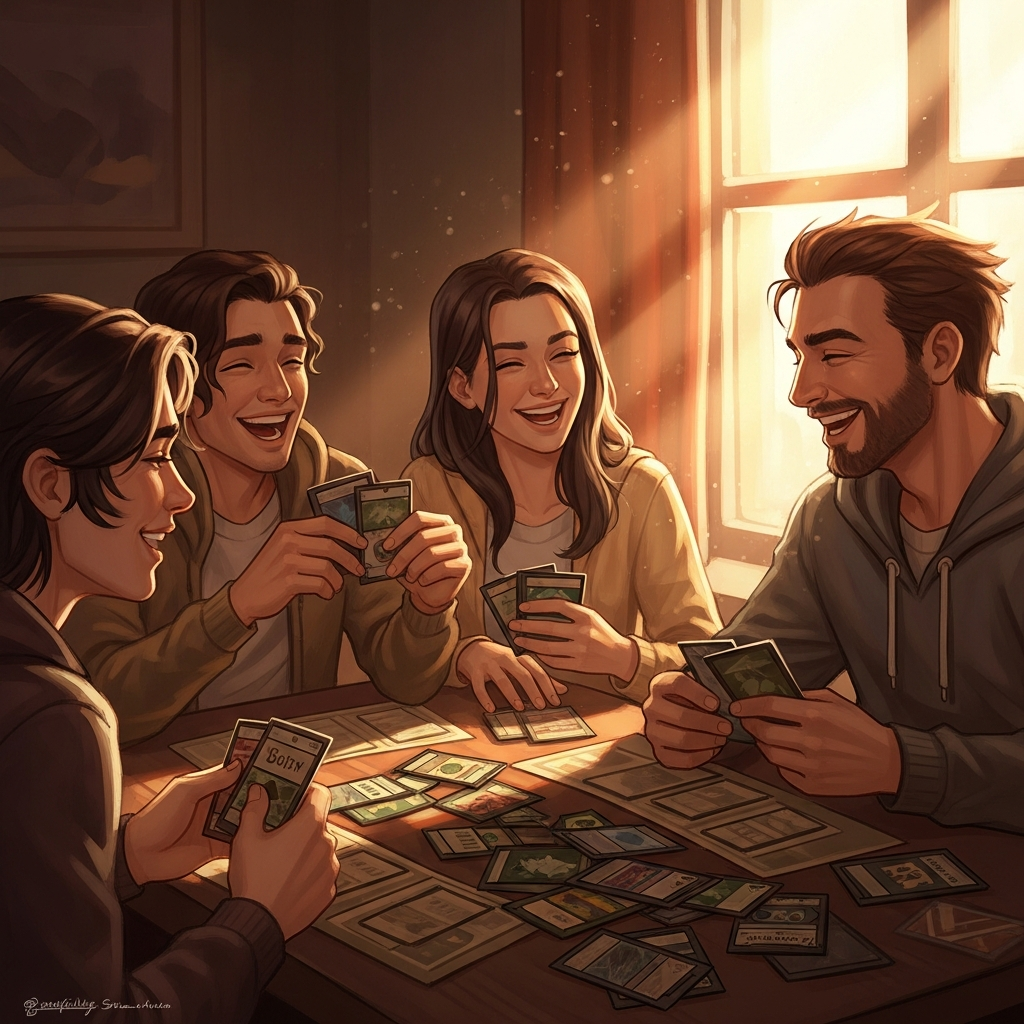
One last truth: there’s no rule saying you must pick only one. Plenty of collectors keep Pokémon as the “opening packs” hobby, play Lorcana casually, and use Magic for deeper strategy nights.
Conclusion
If you’ve been stuck on Pokémon vs Lorcana, the best choice comes down to what you want the hobby to feel like. Pokémon is the all-ages classic with endless collecting momentum, Lorcana is a welcoming Disney-powered newcomer with serious buzz, and Magic is the strategy-rich option that rewards you the more you learn.
Ready to start (or branch out)? Explore our Collectibles & Toys: Shop All page and jump to Pokémon, Lorcana, or Magic to find boosters, bundles, and accessories in one place.
