If you’ve ever opened a pack, pulled a shiny card, and immediately thought, “Okay… I get it now,” welcome. Pokémon card collecting is fun, nostalgic, and (dangerously) satisfying. But it can also feel confusing at first: booster packs, booster boxes, ETBs, sets, rarities, sleeves, binders… where do you even begin?
This guide walks you through a simple, stress-free way to start collecting Pokémon cards in the UK—whether you want to build a binder you love, chase a few favourites, or dip your toe in without overspending.
Decide what kind of collector you want to be
There’s no “correct” way to collect. The trick is picking a lane before you start buying at random.
Here are the most common styles:
1) The “I just want my favourites” collector
You’re here for Pikachu, Eeveelutions, legendary chaos, cute art, and nostalgia.
Best approach: Buy single cards + occasional packs for fun.
2) The “complete the set” collector
You like checklists and finishing what you started.
Best approach: Pick one set and focus on it. Packs for the vibe, singles to finish.
3) The “I like opening packs” collector
It’s the ritual: crack, flip, reveal, dopamine.
Best approach: Keep it budget-friendly: a few packs weekly, maybe a box for special drops.
4) The “play the game” collector
You want a playable deck first, then collecting comes later.
Best approach: Start with starter products and target specific singles.
Quick win: If you’re not sure, start as a “favourites” collector. It’s the least expensive and the most emotionally rewarding.
Learn the basics (packs, boxes, ETBs, tins)
You’ll see a lot of product types. Here’s what they actually mean:
Booster Pack
A single pack of cards—great for casual openings, small budgets, and little treat days.
Good for: fun, gifts, trying a set
Not ideal for: completing a set efficiently
Booster Box
A full display box of packs. More consistent openings and better value per pack compared to buying loose packs one-by-one (depending on pricing).
Good for: serious pack opening, “set season” collecting
Not ideal for: “I only want 5 specific cards”
Elite Trainer Box (ETB)
A collector-friendly bundle: packs plus extras like sleeves, dice, and storage box. Often has gorgeous box art.
Good for: collectors who want a neat start + storage
Not ideal for: maximum packs-for-money
Tins / Collection Boxes
Usually includes packs + promo cards and sometimes coins or extras. Often more “giftable.”
Good for: gifts, promos, variety
Not ideal for: focusing on one set only
If you want one starter buy: an ETB is a clean “all-in-one” beginner option—packs, storage, and sleeves in one go.
Pick one set to focus on (don’t try to collect everything)
Pokémon releases are frequent. If you try to “keep up,” you’ll end up with half-finished binders and regret purchases.
Instead, do this:
- Choose one modern set you like the artwork/vibe of
- Collect casually for that set for 1–3 months
- Then either complete it or move to another set
How to choose a set:
- You love the featured Pokémon
- The art style hits your brain just right
- The set has a chase card you actually want (not just “because TikTok said so”)
Packs vs singles: the smart way to do both
Here’s the simplest strategy that works for most collectors:
The “70/30 method”
- 70% of your spending: singles (cards you genuinely want)
- 30%: packs (because opening packs is part of the fun)
Why this works:
- Packs are entertainment.
- Singles are precision.
- Mixing both keeps you happy and avoids “I opened 60 packs and still didn’t get the card I wanted” heartbreak.
Rule of thumb: If you’ve opened more than ~10 packs hunting one card, it’s usually cheaper to buy it as a single.
How to protect your cards (without turning into a museum curator)
Condition matters if you care about long-term value, but even if you don’t, it’s nicer when your cards stay clean and crisp.
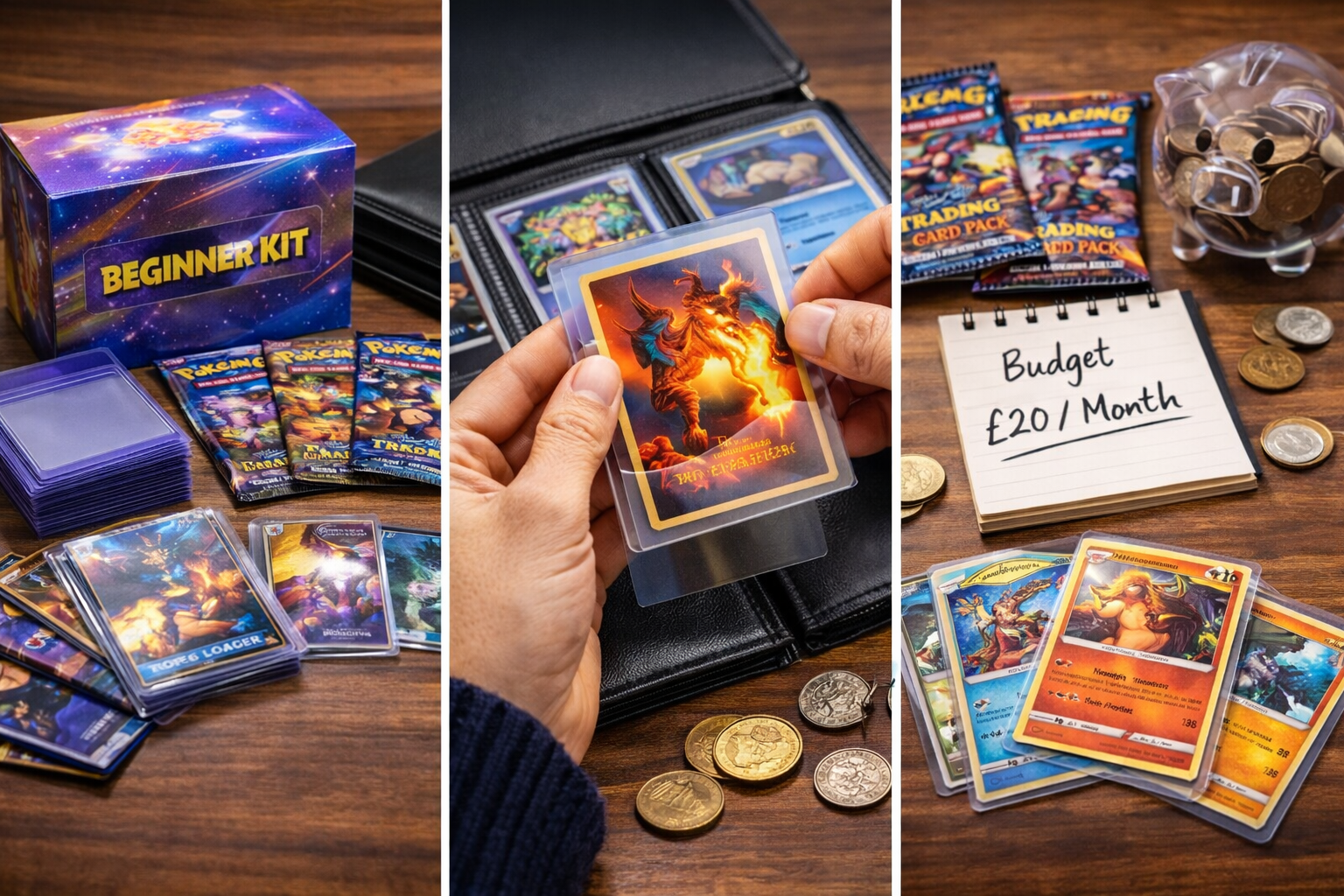
What you need (basic kit)
- Sleeves (for anything holo, shiny, or special)
- Top loaders (for your best pulls)
- Binder (side-loading is ideal)
- Storage box (for bulk)
The simplest protection routine
- Pull card
- Sleeve it
- If it’s a “wow” card: sleeve + top loader
- Put it in a binder you actually enjoy flipping through
Pro tip: Don’t store sleeved cards in a tight binder that bends them. A good binder should lay flat.
How to organise your binder (and make it feel amazing)
Binders can become chaotic fast. Pick a system and stick to it.
Option A: Set order
Arrange cards by number using the set checklist.
Best for: completion collectors
Option B: “Vibes binder”
Arrange by theme: Eeveelutions page, cute page, legendary page, full art page.
Best for: favourites collectors and anyone who wants their binder to feel like a gallery
Option C: Rarity showcase
Put your best cards up front and build “highlight sections.”
Best for: anyone who loves flex pages
If you’re new, start with a vibes binder. You’ll actually enjoy it more.
How to collect on a budget (without losing the fun)
You don’t need a booster box to be a “real” collector. Budget collecting is valid—and honestly, it often leads to a more personal collection.
Budget-friendly ways to collect
- Buy a couple packs weekly instead of big splurges
- Choose 1 set at a time
- Buy singles of your favourites
- Grab gift bundles under £15 for treat-sized collecting
- Trade duplicates with friends (or at community nights/events)
Set a monthly limit
Even a small number helps: £20/month, £40/month, whatever fits. The magic is consistency, not chaos spending.
Common beginner mistakes (and how to avoid them)
Mistake 1: Chasing everything
There will always be another set, another promo, another “must-have.” Pick your focus.
Mistake 2: Buying too many random products
Random tins + random packs across five sets = binder confusion. Choose one set, one goal.
Mistake 3: Ignoring protection until it’s too late
That first scratch on a favourite card hurts emotionally. Sleeve early.
Mistake 4: Thinking you need to “invest”
If you love value retention, cool. But don’t let it kill the joy. Collect what you genuinely like first.
Mistake 5: Keeping bulk with no plan
Bulk piles up fast. Decide: store it neatly, trade it, or donate it.
“What should I buy first?” (simple starter shopping list)
If you want a clean, beginner-friendly starting point, here are three solid options:
Starter Option 1: The “fun + organised” start
- 1 x ETB (Elite Trainer Box)
- 1 x binder
- 1 x pack or two each week after
Starter Option 2: The “low budget, high joy” start
- 5–10 single cards you love
- sleeves + a small binder
- 2–4 booster packs for fun
Starter Option 3: The “pack-opening weekend” start
- 1 x booster box (if it fits your budget)
- sleeves + top loaders ready to go
- a binder for your favourite pulls
If you’re unsure: start with Option 2. It’s the least risky and usually the most satisfying.
Where to buy Pokémon cards safely in the UK
Stick to reputable shops and be cautious with deals that look too good to be true.
Good signs:
- clear product photos and descriptions
- sealed products listed properly
- straightforward shipping/returns info
- a shop that also sells sleeves, binders, and accessories (they understand collectors)
Red flags:
- suspiciously cheap booster boxes
- unclear packaging or “factory sealed??” wording
- no contact details
- inconsistent product naming
Final checklist: your first month of collecting (easy plan)
Here’s a simple plan you can follow without overthinking:
Week 1
- pick one set
- buy sleeves + a binder
- buy 2–6 packs OR a small bundle + a few singles
Week 2
- open a couple packs
- start your binder system
- buy singles of 2–5 cards you really want
Week 3
- only buy within your set
- upgrade protection for your best pulls
- trade duplicates if you can
Week 4
- decide your next goal:
- keep going with this set
- start a “vibes binder” page
- complete a mini-collection (like “all Eeveelutions”)
By the end of month one, you’ll have a collection that already feels yours, not just random pulls.
Ready to start?
Collecting Pokémon cards is supposed to be fun. If you treat packs like entertainment, use singles for the cards you truly want, and protect your favourites early, you’ll build a collection you’ll actually enjoy—not just a pile of cardboard.
If you want, tell me your budget (e.g., £25/month, £50/month) and whether you prefer packs or singles, and I’ll write a personalised “first 5 purchases” plan for your shop.
FAQ for the blog (Pokémon card collecting in the UK)
1) What should I buy first as a brand-new collector?
A safe first buy is an Elite Trainer Box (ETB) (packs + storage + accessories) or a few booster packs plus sleeves and a binder. If you want a quick overview of official product types, Pokémon has a Product Guide that breaks down what each item is for. tcg.pokemon.com
2) What’s the difference between a booster pack and a booster box?
A booster pack is one pack; a booster box is a full display of many packs (better for a big opening session and more consistent pulls overall). Pokémon’s official product pages and gallery show these product categories and how they’re positioned. Pokémon+1
3) What’s an Elite Trainer Box (ETB) actually for?
An ETB is designed as a “starter bundle”: it typically includes multiple packs plus play/collector extras and a storage box. You can see ETBs as an official product type in Pokémon’s product gallery and official store listings. pokemoncenter.com+1
4) Is it better to buy packs or single cards?
For most beginners: do both—packs for fun, singles for specific cards you really want. Singles are usually the most cost-effective way to target favourites; packs are entertainment.
5) How do I avoid fake Pokémon cards and packs?
Buy from reputable retailers and be cautious with “too good to be true” pricing. For practical checks (spelling errors, print quality, etc.), this TCGplayer guide is a solid reference. TCGPlayer
6) Where can I buy Pokémon TCG products safely?
Pokémon’s official TCG site has a “Where to buy” page (and it also encourages supporting local game stores). Use that as a starting point, then compare UK stockists. tcg.pokemon.com
7) How do I pick a set to collect?
Pick a set based on artwork/featured Pokémon and your budget. If you’re overwhelmed, start with “collect favourites” and move into set-completion later.
8) What supplies do I need to protect my pulls?
Minimum: sleeves + binder. For higher-value pulls: top loaders (or semi-rigids) + a safe storage box. This prevents edge wear, surface scratches, and binder dings.
9) What’s the best binder setup for beginners?
Side-loading binders are popular because cards sit more securely. Organise by:
- set number order (for completion), or
- “vibes” pages (favourites, full arts, cute page, etc.).
10) Do Pokémon cards “hold value”?
Some do, many don’t. If you enjoy the hobby, collect what you like first. Treat value as a bonus, not the goal.
11) Can I return Pokémon cards bought online in the UK?
For most online purchases, UK rules generally give customers a 14-day cancellation window after delivery (with some exceptions and conditions). UK government guidance explains the rules for online and distance selling. GOV.UK+1
12) I want to play, not just collect—what should I buy?
Start with products meant for beginners/players (starter-focused items, guides, accessories). Pokémon’s official TCG Product Guide is the best “what’s for players vs collectors” overview. tcg.pokemon.com
13) How do I know if a store listing is trustworthy?
Good signs:
- clear product naming (set name, product type)
- real photos or accurate official images
- transparent shipping/returns/contact info
- consistent pricing (not wildly under market)
Red flags:
- unbelievably cheap “sealed” boxes
- vague descriptions and no policies/contact details
14) How should I store bulk cards?
Keep bulk in a dedicated card storage box, away from heat/humidity. If you want to reduce bulk: trade, sell bundles, or donate.
